Launch offer — valid today only

📄 Digital book in PDF · read it on your phone or print it

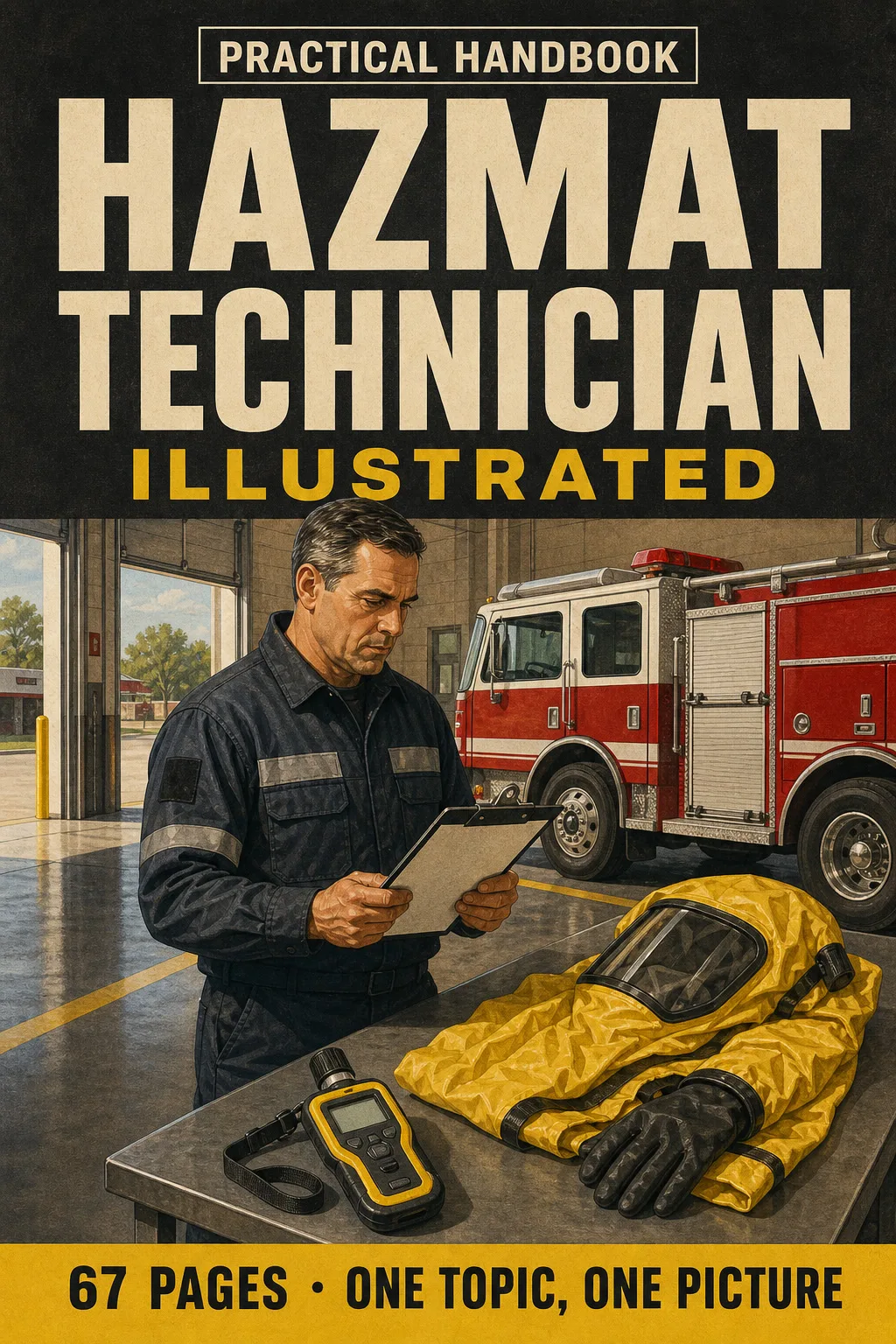
Hazmat Technician, Illustrated: Read the Meter, Pick the Level, Set Up Decon One Topic on Every Page

Already have Operations? This picks up there: the four-gas meter and % LEL, Levels A to D, breakthrough time, plugging a drum and the decon corridor. One page per topic: the drawing first, then what to remember. 67 illustrated pages.

START STUDYING THIS WAY

🔒 Secure checkout · PDF by email · 30-day guarantee

Every topic, its own pageEvery meter reading and PPE choice drawn, with the explanation right beside it
67 illustrated pages9 parts, from the Technician role to the skills station review
Up-to-date sourcesNFPA 470, OSHA 29 CFR 1910.120(q) and the DOT ERG
PDF by emailFormat

Look Inside the Book

Every page has one big drawing and a box with the numbers and steps you need to know:

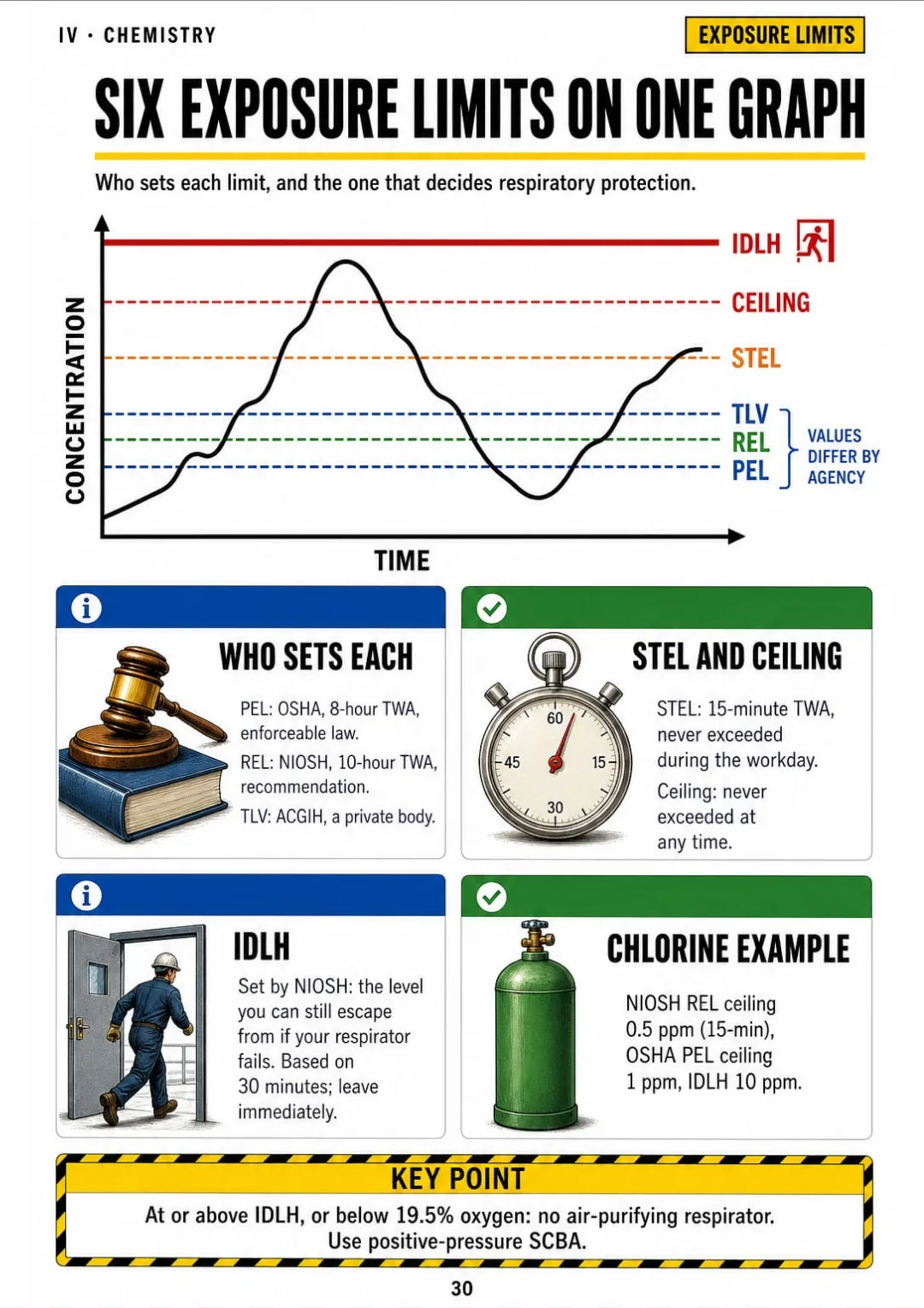
PEL is law, REL a recommendation, IDLH decides SCBA: chlorine IDLH 10 ppm.
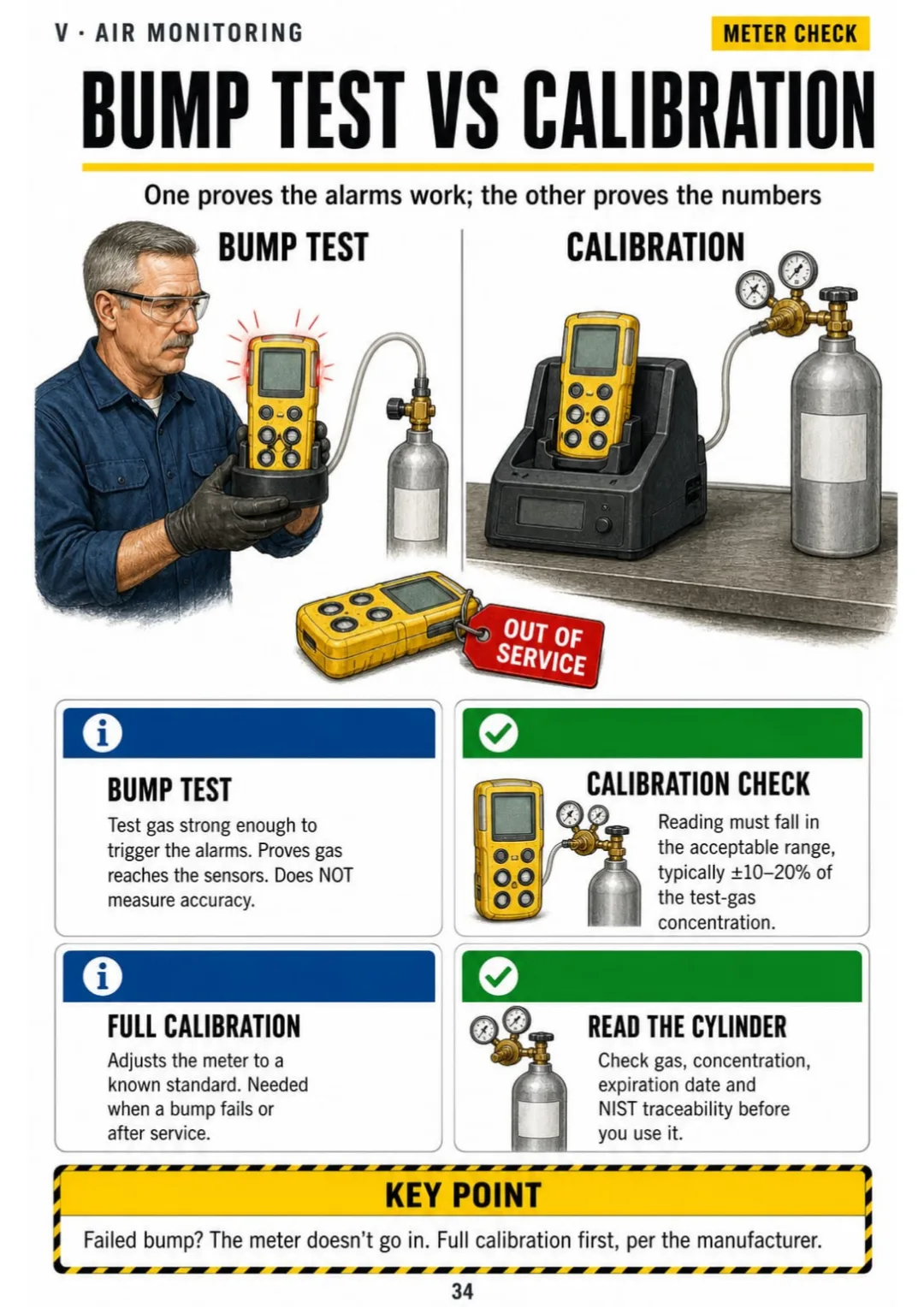
Bump = alarms respond · Calibration check = within ±10–20% · Failed bump = full calibration before use.
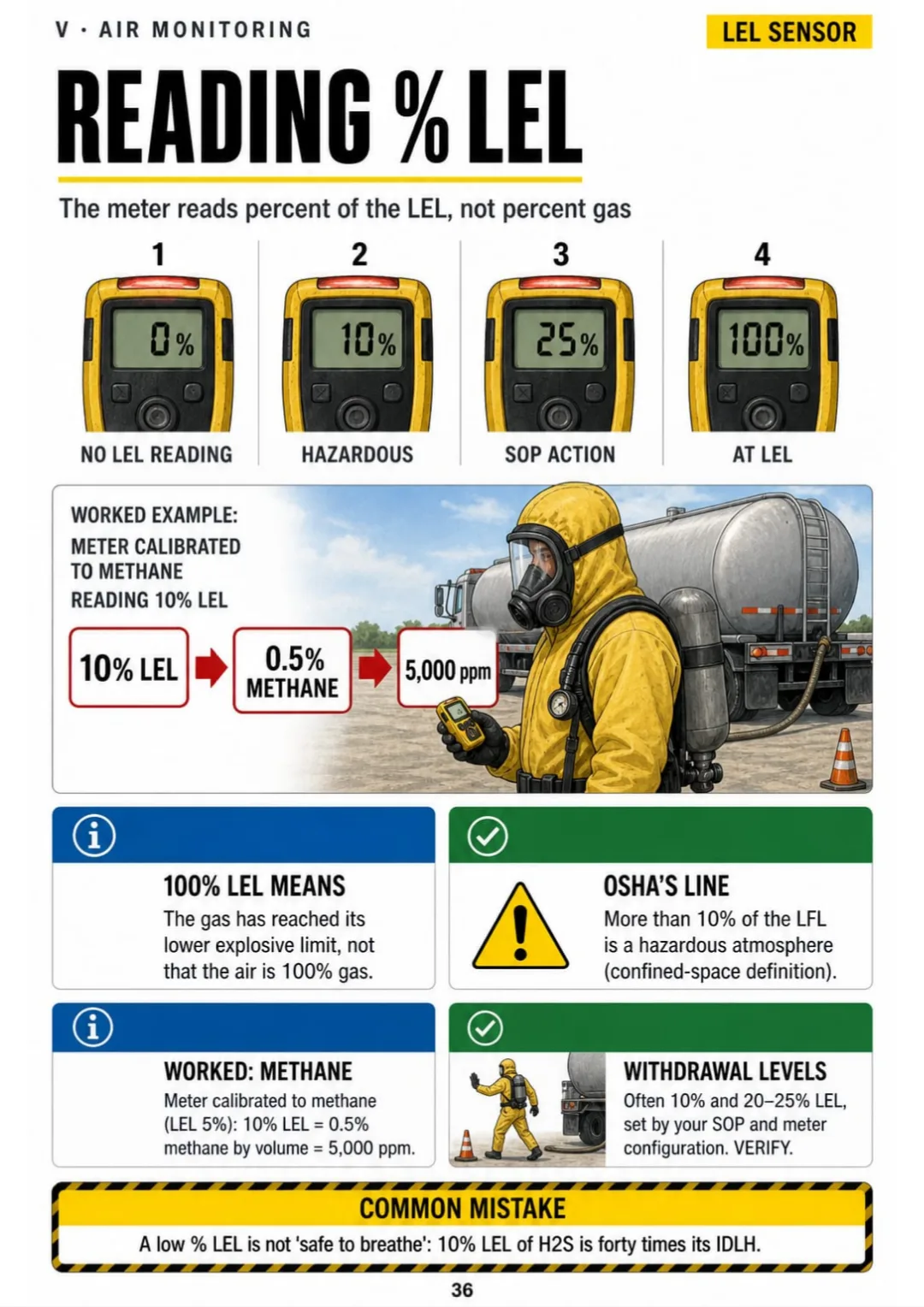
10% LEL of H2S = 0.4% by volume = 4,000 ppm, forty times the 100 ppm IDLH.
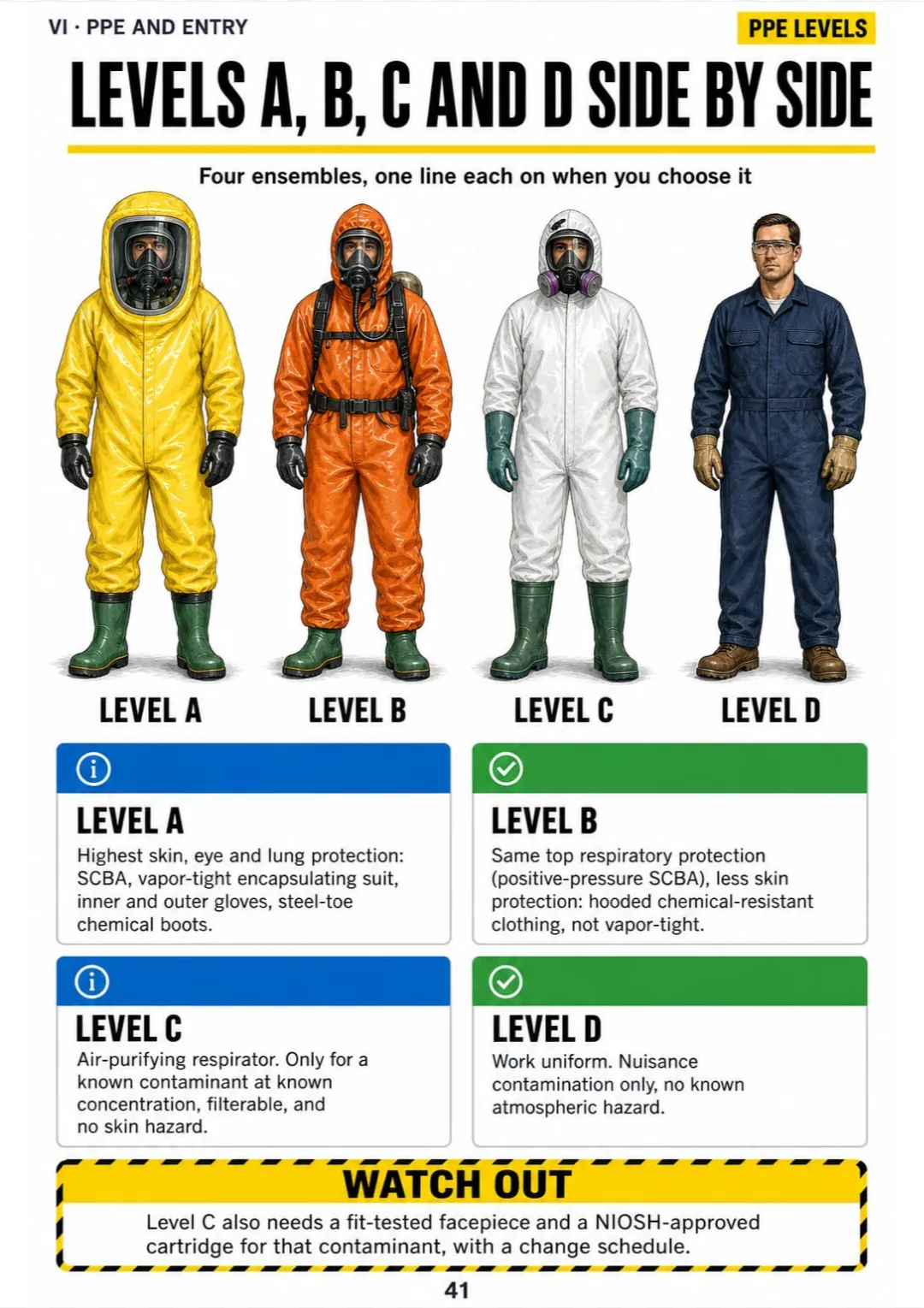
Levels A to D drawn side by side, with the condition that sends you to each one
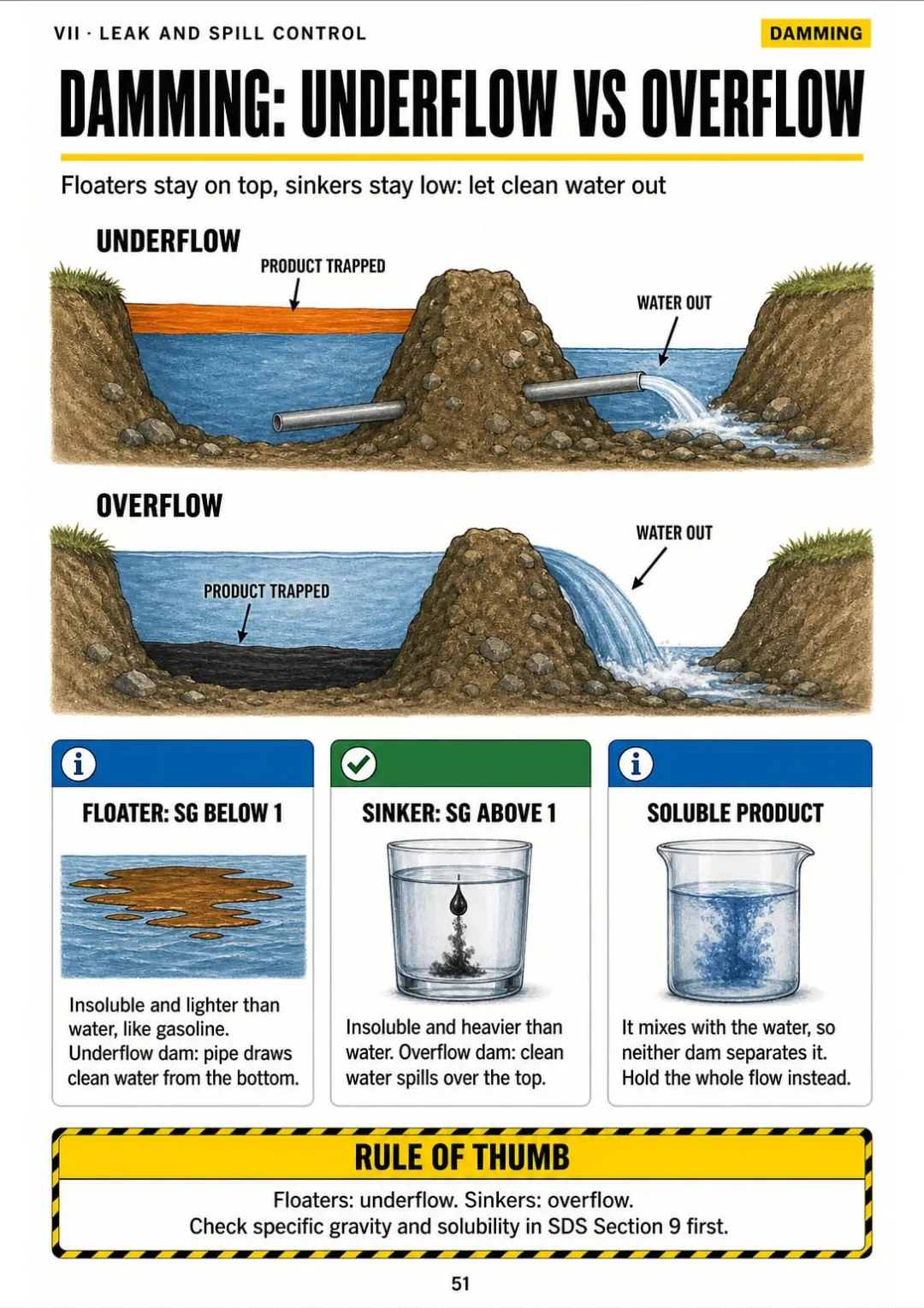
SG below 1 and insoluble: underflow dam. SG above 1: overflow dam.
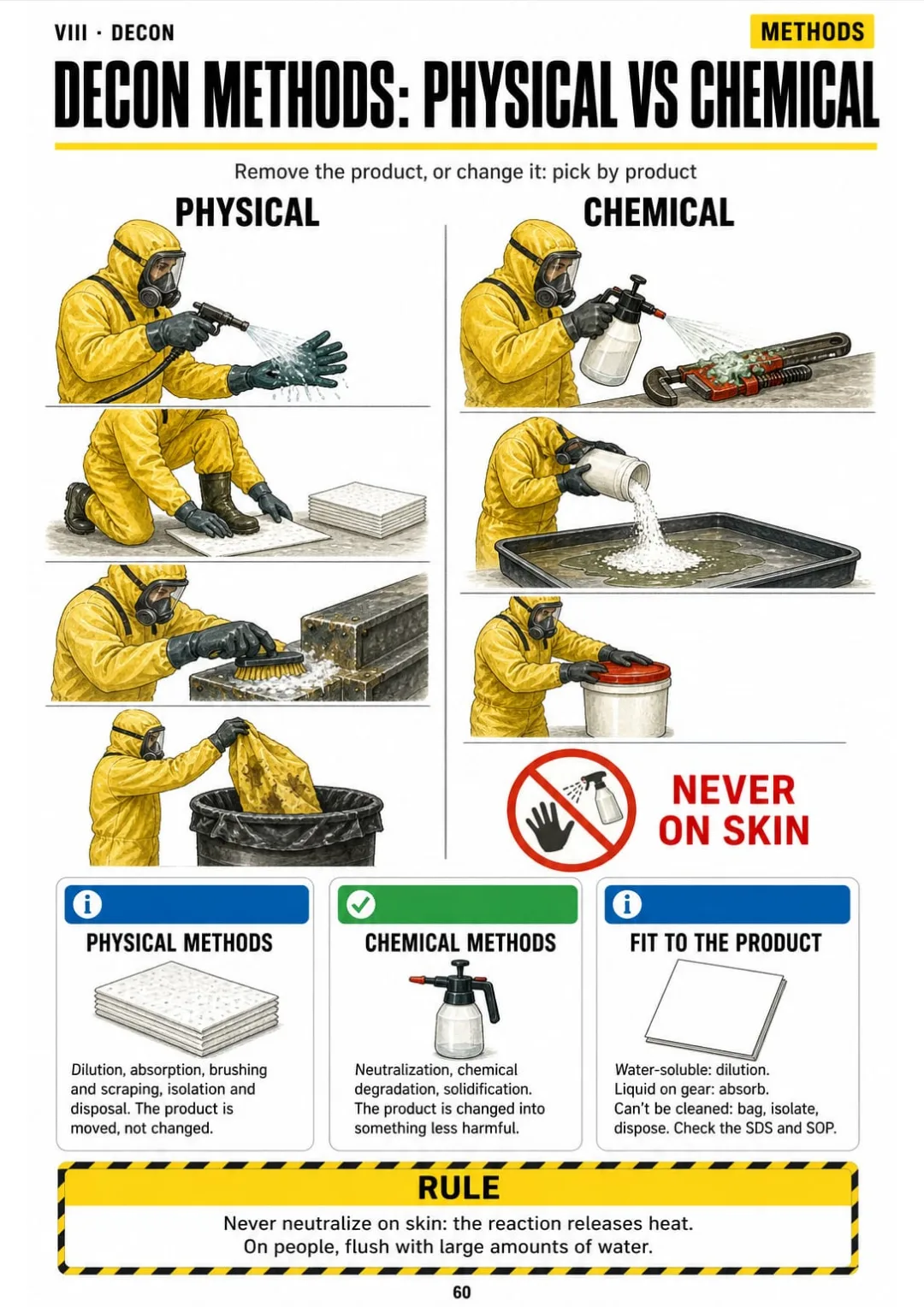
Physical vs chemical decon, and why you never neutralize on skin
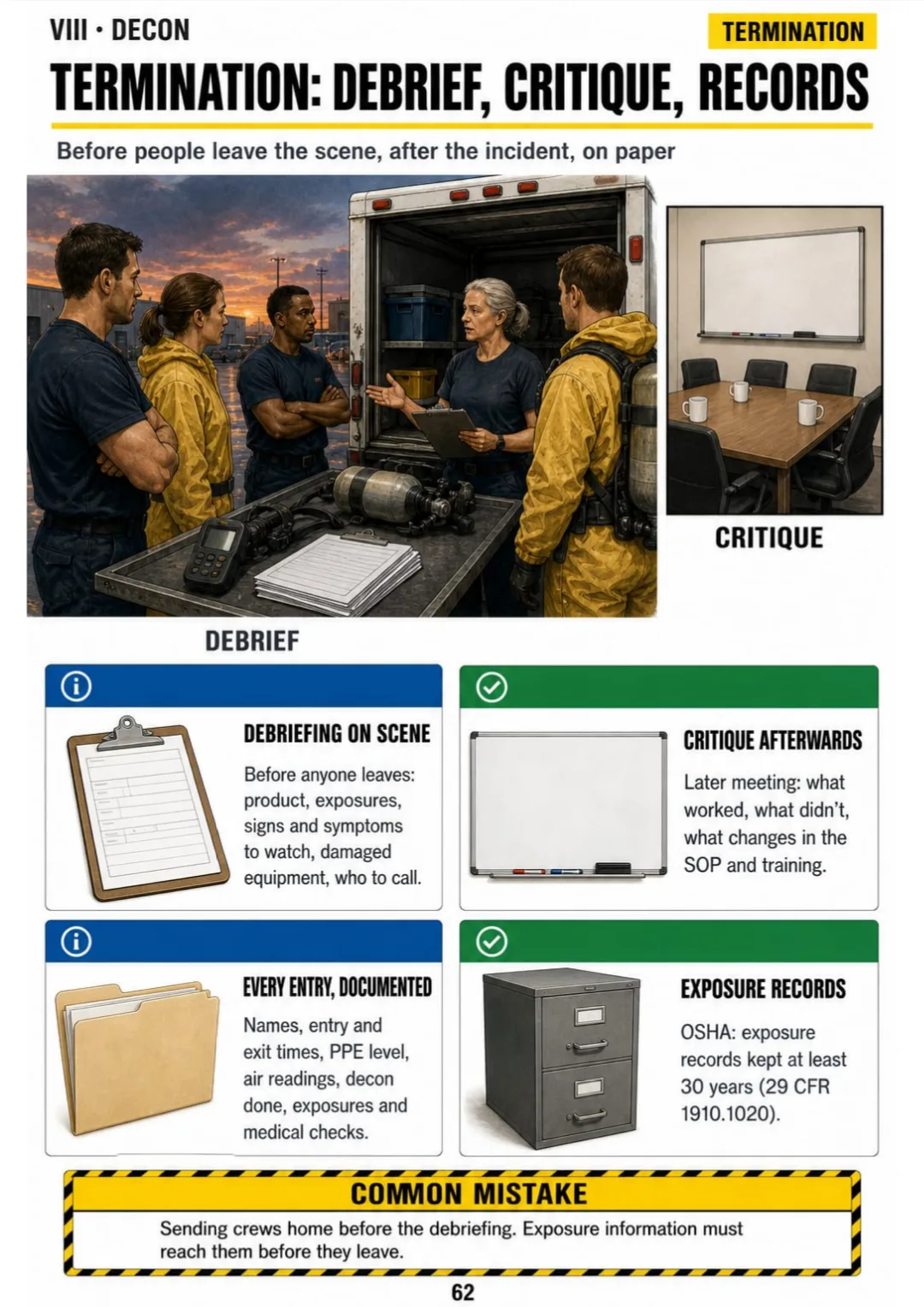
Termination: debrief before leaving, critique later, exposure records kept employment + 30 years
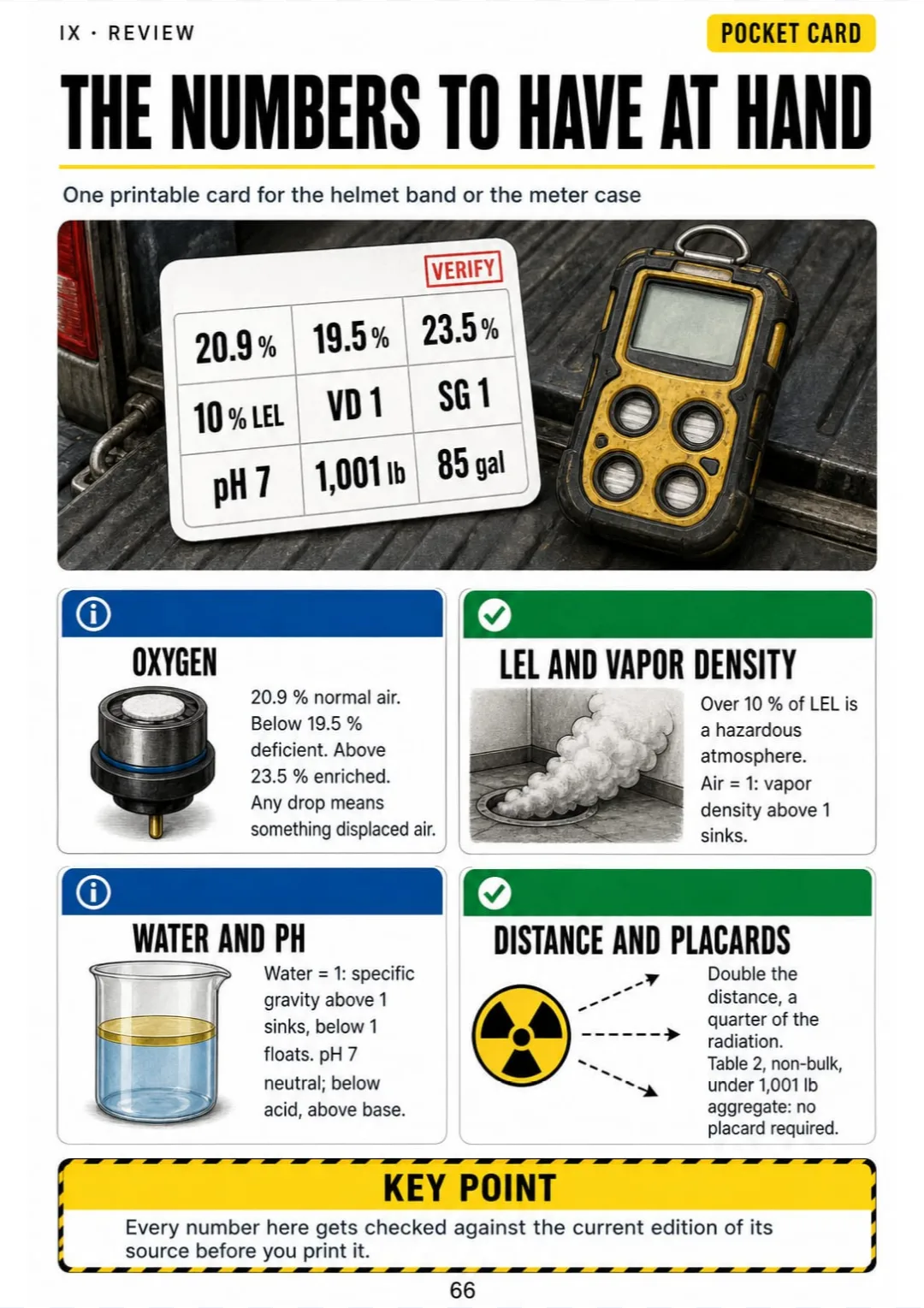
20.9 / 19.5 / 23.5 % O2, 10 % LEL, VD 1, SG 1, pH 7, 1,001 lb, 85 gal

Swipe to see more →

These are real pages from the book. The table of contents is the full one: 9 parts and 63 topics.

The Problem Isn't You. It's How It Was Explained to You.

You're at the skills station. The meter in your hand reads 10% LEL, and the evaluator asks what that number means for the entry team.

The manual covers % LEL in three dense paragraphs: lower explosive limit, a percentage of a percentage, sensor response. It made sense when you read it. A week later it runs together with the oxygen sensor and the IDLH.

10% LEL of H2S = 0.4% by volume = 4,000 ppm, forty times the 100 ppm IDLH.

In the book, % LEL is one page. The meter scale is drawn from 0 to 100% LEL, and the math is worked out next to it: 10% LEL of H2S is 0.4% by volume, or 4,000 ppm, which is forty times the 100 ppm IDLH.

The oxygen sensor, Levels A to D, breakthrough time, the underflow dam and the decon corridor work the same way: each one has its own page.

You see it, you know what the number means and you answer the evaluator without going back to the binder.

COMPARE FOR YOURSELF

The Same Topic, Two Ways to Study It

THIS
  • The manual: line after line of text
  • Meter readings explained only in words
  • You walk into the skills station unsure
The oxygen sensor of a multi-gas monitor measures the concentration of oxygen in the ambient atmosphere, expressed as a percentage by volume. Normal ambient air contains approximately 20.9 percent oxygen. Atmospheres containing less than 19.5 percent oxygen are considered oxygen-deficient, while concentrations exceeding 23.5 percent are considered oxygen-enriched and present an increased fire hazard. Any decrease in oxygen concentration indicates displacement by another gas; each one percent reduction corresponds to approximately five percent of the atmosphere having been displaced by an unidentified contaminant.
FOR THIS
  • The oxygen sensor in one drawing
  • 20.9, 19.5 and 23.5 in one box
  • You see it and you get it
Bump = alarms respond · Calibration check = within ±10–20% · Failed bump = full calibration before use.
CONTENTS

Take a Look at the 9 Parts and 63 Topics

The Technician role, product ID, containers, chemistry, air monitoring, PPE, leak control, decon and the skills station review: 67 pages, all illustrated

IThe Technician Role and the Method · pp. 5-10
  1. What a Technician Does That Operations Doesn't
  2. The HAZWOPER Response Levels on One Ladder
  3. The 7-Step Method Used on Every Page
  4. Analyze, Plan, Implement, Evaluate
  5. Who Does What in the Hazmat Group
  6. Regulation vs Standard: OSHA, EPA and NFPA
IIIdentify the Product · pp. 11-17
  1. The 9 DOT Hazard Classes in One Drawing
  2. Placards, UN/NA Numbers and When They're Required
  3. The ERG in Four Colors
  4. ERG Green Pages: Isolate vs Protect
  5. The NFPA 704 Diamond
  6. The SDS Sections You Use on Scene
  7. Where the Shipping Papers Are
IIIContainers and How They Fail · pp. 18-24
  1. MC-306 / DOT-406: The Gasoline Tanker
  2. DOT-407 and DOT-412: Chemicals and Corrosives
  3. MC-331 and MC-338: Pressure and Cryogenic
  4. Rail Tank Cars: Pressure vs General Service
  5. Drums, IBCs, Cylinders and Intermodal Tanks
  6. The Container Failure Sequence
  7. BLEVE: The Signs and the Distance
IVChemistry That Decides Your Tactics · pp. 25-32
  1. Vapor Density: Does It Rise or Sink?
  2. Specific Gravity and Water Solubility
  3. Flash Point, Autoignition and Flammable Range
  4. Vapor Pressure and Boiling Point
  5. Corrosives and the pH Scale
  6. Exposure Limits: TLV, PEL, REL, STEL, Ceiling, IDLH
  7. Routes of Entry and Health Effects
  8. Radiation: Alpha, Beta, Gamma, Neutron
VAir Monitoring · pp. 33-40
  1. The Order You Meter In
  2. Bump Test vs Calibration
  3. The Oxygen Sensor: 20.9, 19.5, 23.5
  4. Reading % LEL
  5. Correction Factors for the LEL Sensor
  6. Toxic Sensors: CO and H2S
  7. PID: What It Sees and What It Misses
  8. pH Paper, Colorimetric Tubes and Dosimeters
VIPPE and Entry · pp. 41-48
  1. Levels A, B, C and D Side by Side
  2. Choosing Between Level A and Level B
  3. Permeation, Degradation, Penetration
  4. Breakthrough Time, Worked Out
  5. Reading a Chemical Compatibility Chart
  6. SCBA Air Time and the Turnaround Point
  7. Heat Stress and Medical Monitoring
  8. Donning, Doffing, Buddy and Backup
VIILeak and Spill Control · pp. 49-57
  1. Defensive vs Offensive Control
  2. Absorption vs Adsorption
  3. Damming: Underflow vs Overflow
  4. Diking, Diverting and Retention
  5. Vapor Suppression and Vapor Dispersion
  6. Plugging and Patching a Drum
  7. Overpacking with a Salvage Drum
  8. Chlorine Kits A, B and C
  9. Bonding, Grounding and Product Transfer
VIIIDecon and Termination · pp. 58-62
  1. Hot, Warm and Cold Zones
  2. Laying Out the Decon Corridor
  3. Decon Methods: Physical and Chemical
  4. Emergency, Gross, Technical and Mass Decon
  5. Termination: Debriefing, Critique, Records
IXReview and Skills Stations · pp. 63-67
  1. The Incident Action Plan and Site Safety Plan
  2. The Method on One Scenario
  3. Skills Station Self-Check
  4. The Numbers to Have at Hand
  5. The Most Frequent Mistakes, Before and After

One Page, One Topic, All Clear

Think of it this way:

It's the night before your skills stations. You know the scenario will make you choose between Level A and Level B, and you want the reason clear in your head, not a guess.

You open the book to Levels A to D and the four ensembles are drawn side by side, each with the condition that calls for it.

SG below 1 and insoluble: underflow dam. SG above 1: overflow dam.

The oxygen sensor, reading % LEL, the underflow and overflow dams, the hot, warm and cold zones and the decon corridor work the same way: each one gets its own page.

Hazmat Technician Illustrated has 9 parts and 63 topics, all drawn. At the end you get the method on one scenario, a skills station self-check and the numbers to have at hand.

What you see drawn, you don't have to memorize.

What's Inside Hazmat Technician Illustrated:

Ipp. 5-10

The Technician Role and the Method

What a Technician does that Operations doesn't, the HAZWOPER levels, the 7-step method, analyze-plan-implement-evaluate, the hazmat group, and regulation vs. standard

IIpp. 11-17

Identify the Product

The 9 DOT hazard classes, placards and UN/NA numbers, the four colors of the ERG and its green pages, the 704 diamond, the SDS and the shipping papers

IIIpp. 18-24

Containers and How They Fail

Highway tankers from gasoline to cryogenic, rail tank cars, drums, IBCs, cylinders, intermodal tanks, the container failure sequence and BLEVE

IVpp. 25-32

Chemistry That Decides Your Tactics

Vapor density, specific gravity, flash point and flammable range, vapor pressure, pH, the six exposure limits, routes of entry and radiation

Vpp. 33-40

Air Monitoring

Read any meter in the same order every time: bump test vs. calibration, the oxygen sensor, % LEL and correction factors, CO and H2S, the PID, pH paper, tubes and dosimeters

VIpp. 41-48

PPE and Entry

Pick the right ensemble and know how long it holds: Levels A to D, A vs. B, permeation and a worked breakthrough time, compatibility charts, SCBA air time, heat stress, donning, doffing and backup

VIIpp. 49-57

Leak and Spill Control

Defensive vs. offensive, absorption vs. adsorption, dams, dikes and retention, vapor control, plugging and overpacking a drum, chlorine kits and bonding

VIIIpp. 58-62

Decon and Termination

Hot, warm and cold zones, the decon corridor, physical and chemical methods, the four types of decon, and termination

IXpp. 63-67

Review and Skills Stations

The IAP and site safety plan, the method on one scenario, the skills station self-check, the numbers to have at hand and the most frequent mistakes

At the end of the book: A skills station self-check, the numbers to have at hand and the most frequent mistakes, before and after.
Plus: 2 Free Books

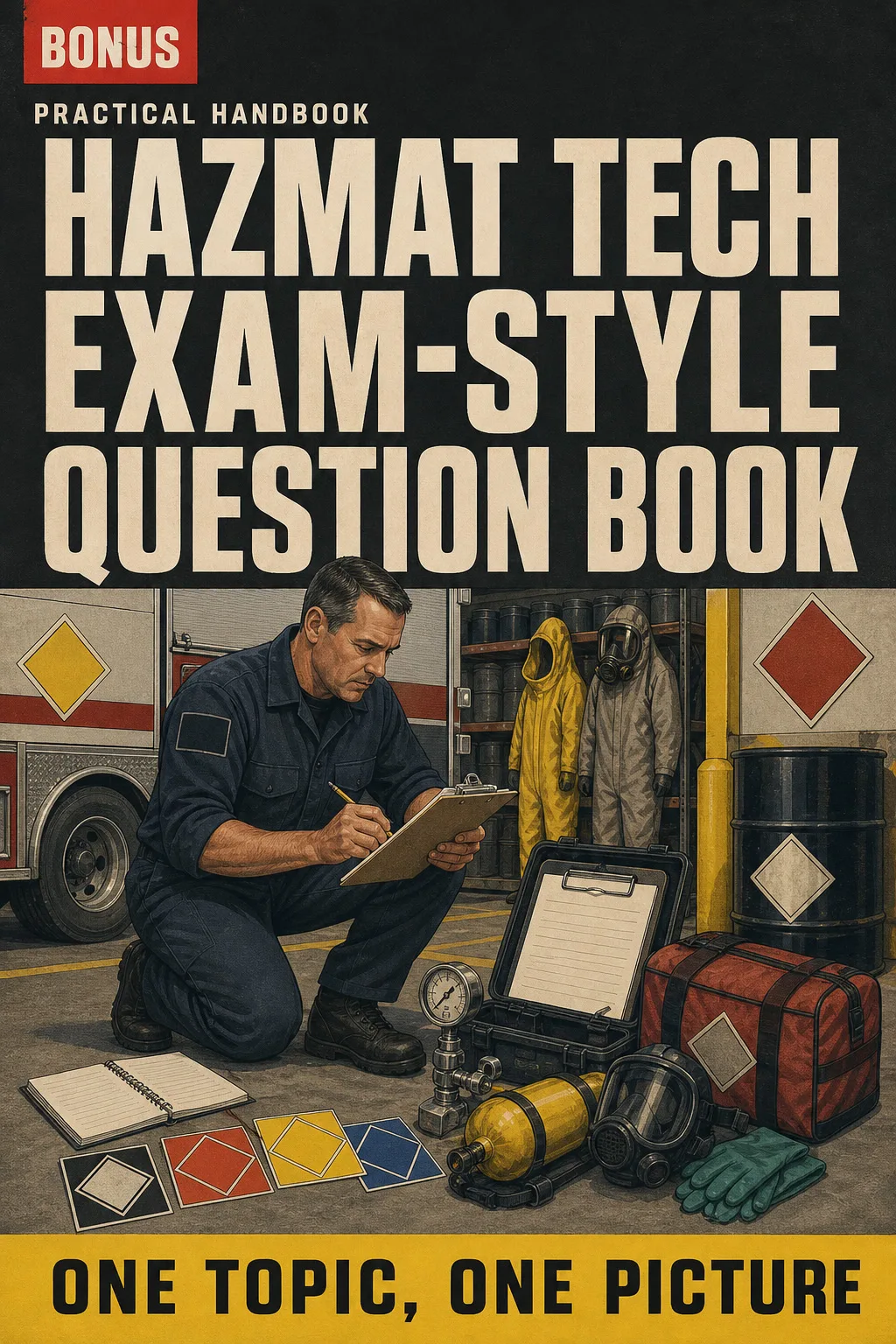
Hazmat Tech Exam-Style Question Book

BONUS 1: «Hazmat Tech Exam-Style Question Book»

Value on its own: US$ 17.90

Practice with exam-style questions on every chapter, each answer explained with the page where it's drawn, so you know exactly what to go back and review.

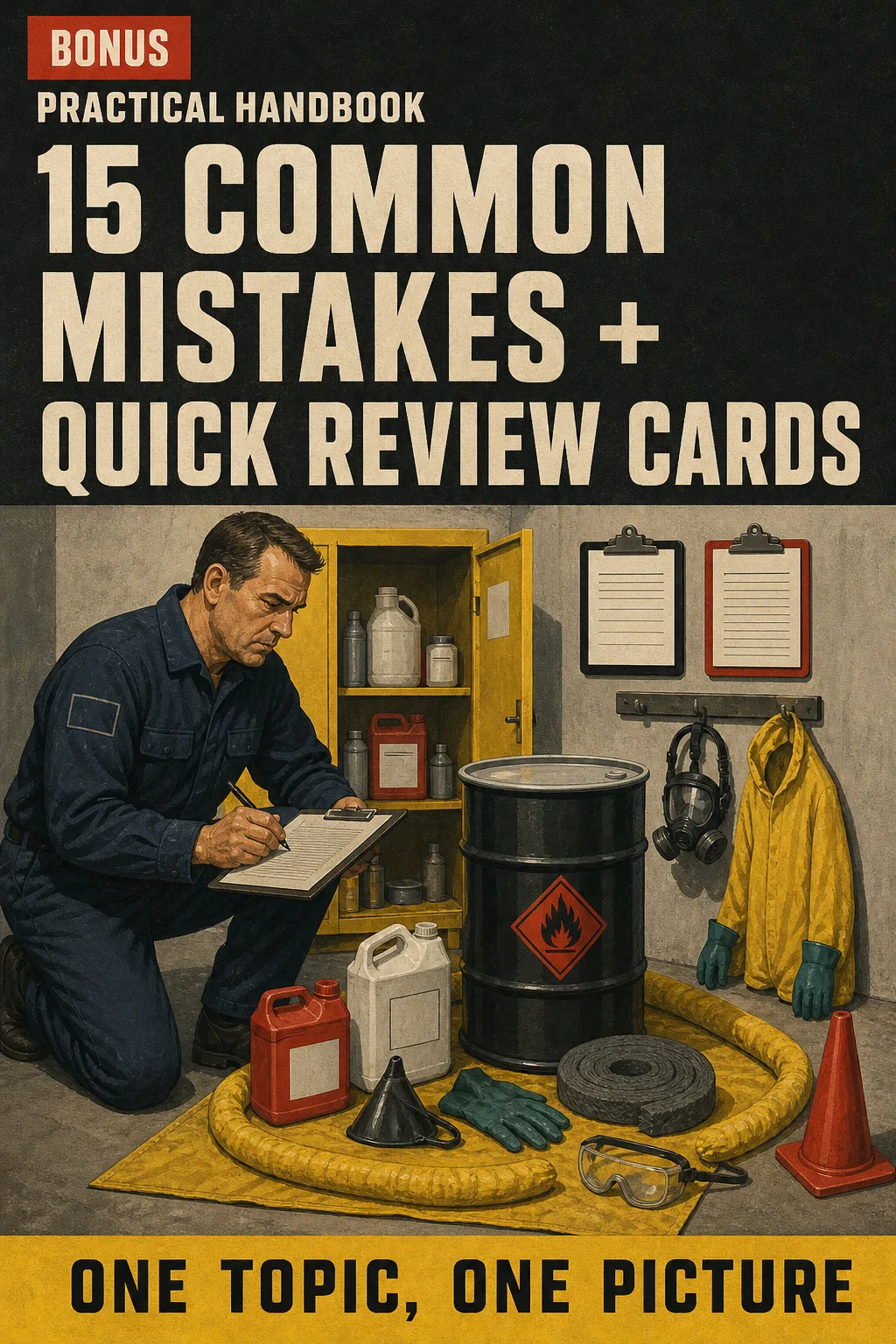
15 Common Mistakes + Quick Review Cards

BONUS 2: «15 Common Mistakes + Quick Review Cards»

Value on its own: US$ 14.90

The most frequent mistakes on meters, PPE choice and decon shown before and after, plus one-page cards you can print and review at the station.

Hazmat Technician Illustrated with 2 Free Books

  • Hazmat Technician Illustrated: 67 illustrated pagesUS$ 63
  • BONUS 1: Hazmat Tech Exam-Style Question BookUS$ 17.90
  • BONUS 2: 15 Common Mistakes + Quick Review CardsUS$ 14.90
  • High-resolution PDF to printIncluded
Total value US$ 95.80
YOUR PRICE:
US$ 27
You save US$ 68.80
YES, I WANT HAZMAT TECHNICIAN ILLUSTRATED FOR US$ 27

📄 This is a digital PDF book sent to your email: nothing is printed or shipped.

Secure purchaseEncrypted payment30-day guarantee

PDF by email: We email you Hazmat Technician Illustrated as a PDF, together with the two free books. It's a single payment: no installments, no extra charges.

Who This Book Is For

You're taking the Technician class

You're taking the Technician class

The class moves fast. You get each topic as one drawn page you can review between shifts, in the same order every time.

Your written test and skills stations are close

Your written test and skills stations are close

Meters, PPE levels, dams and the decon corridor laid out step by step, so you go in knowing the sequence the evaluator expects.

You're already on the hazmat team

You're already on the hazmat team

For the annual refresher. The numbers and steps you learned years ago, ready to check at a glance at the station.

Everything You Get Today

US$ 95.80US$ 27
YES, I WANT HAZMAT TECHNICIAN ILLUSTRATED FOR US$ 27

📄 This is a digital PDF book sent to your email: nothing is printed or shipped.

30DAYS
GUARANTEE

30-Day Guarantee

Try Hazmat Technician Illustrated for 30 days, bonus books included.

We refund everything if the file won't open, if the book isn't what you see here, if you were charged twice or if the email doesn't arrive. Just email us.

You pay once. No subscriptions.

Frequently Asked Questions

Is it for me if I already have Operations and years on the job?

Yes. It doesn't start from zero: it starts where Operations ends and covers the Technician material (meters, PPE choice, leak control and decon). What it adds to your class manual is the format: one topic per page, the drawing first and the numbers in a box, so you can review a topic between shifts instead of digging through the binder.

Where does the content come from?

From NFPA 470 (the standard that replaced NFPA 472), OSHA 29 CFR 1910.120(q), the DOT Emergency Response Guidebook and the NIOSH Pocket Guide, checked against their current editions. Pro Board and IFSAC accredited programs, like the ones TEEX and state academies run, certify against the NFPA Technician requirements this book follows. Each program uses its own skill sheets, and some states add items, so check yours for anything extra.

Is this official material? Do I get a certificate?

No to both. It's independent study material: it names the standard and the agencies only to say what it covers, and it isn't affiliated with or endorsed by any of them. It doesn't count as training hours. Your certification comes only from your course and your certifier's exam.

Does it replace the course or hands-on training?

No. It helps you study and review. It doesn't replace your certification course, hands-on training, your department's SOPs or the instrument and suit manufacturers' instructions.

Are the practice questions the ones on the exam?

No. They're written for this book in exam style. Each answer points to the page where the topic is drawn.

When and how do I get it?

The book and the 2 bonus books arrive as PDFs by email, at the address you enter at checkout.

Do I have to pay every month?

No. It's a one-time payment.

Can I have it on paper?

Yes. The PDFs are printable, so you can print the whole book or only the pages you want at the station.

How does the refund work?

You have 30 days. We refund everything if the file won't open, if the book isn't what you see on this page, if you were charged twice or if the email doesn't arrive: just email us.

Before You Close This Page

No more rereading the binder without anything sticking.

% LEL, Levels A to D and the decon corridor are drawn. You look, and you've got it.

You walk into the skills station knowing where everything is.

Drawings make studying faster.

The book is right below.

One-time payment: US$ 27 · Guarantee: 30 days · PDF by email

YES, I WANT HAZMAT TECHNICIAN ILLUSTRATED FOR US$ 27

📄 This is a digital PDF book sent to your email: nothing is printed or shipped.